Get Your Kid Ready for the AUS Educational Framework!
Help your child excel with our effective teaching program, designed to complement the Australian Education Framework. We provide strong academic foundations while encouraging creativity, critical thinking, communication, teamwork, problem-solving and independent learning skills.
Through practical learning experiences, individual attention and unique teaching styles, Kiya Learning helps students build confidence and prepare for a smooth transition into an Australian schooling environment.
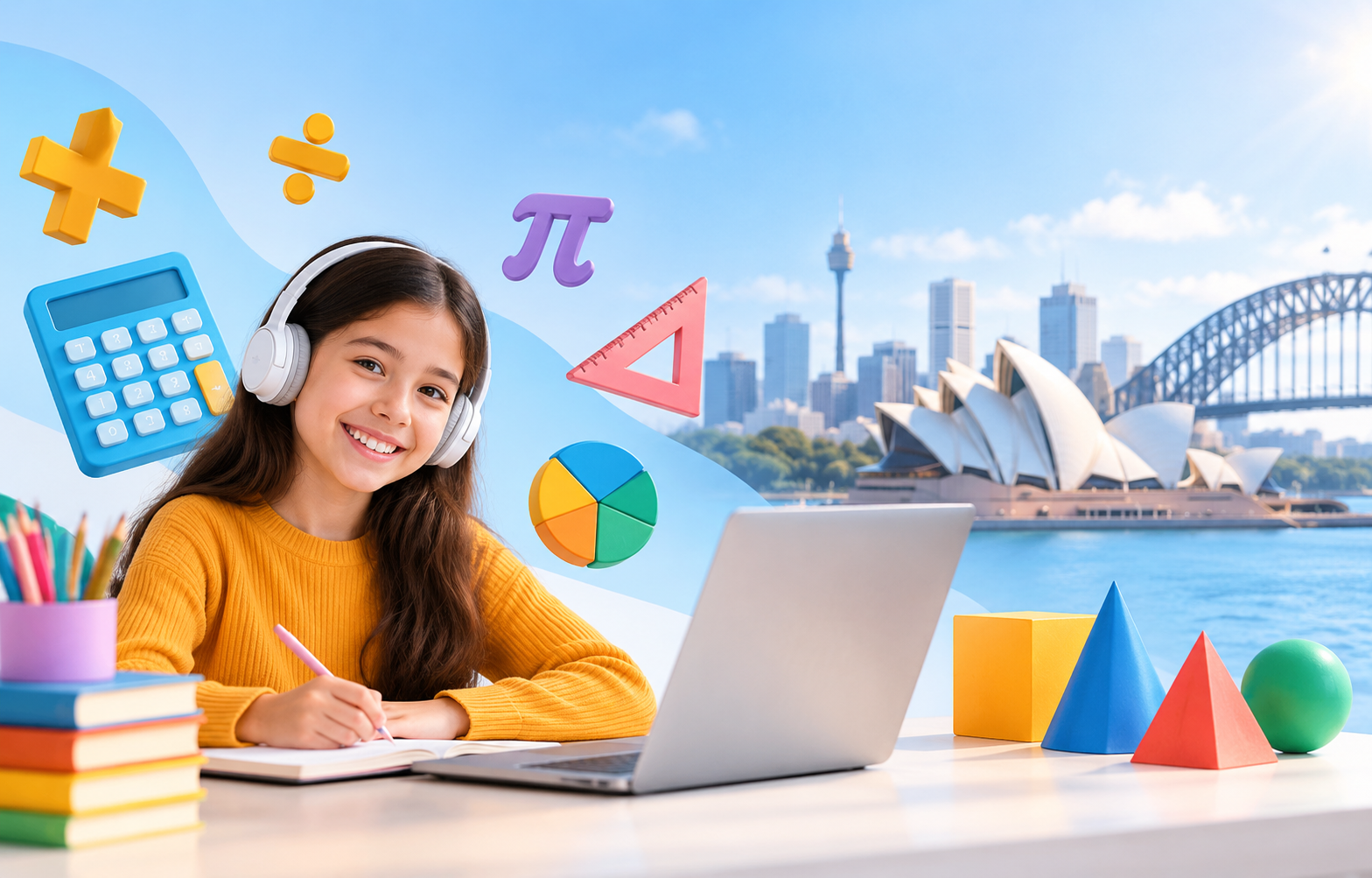
Learning Designed Around the Australian Education System
After conducting extensive research into the Australian educational system, Kiya Learning provides curriculum-focused learning designed to support students following Victorian, Australian and NSW educational pathways.
Foundation to Year 2
Build strong early academic foundations through age-appropriate learning activities, language development, mathematics, science and creative learning.
Years 3 to 6
Strengthen core academic knowledge while developing problem-solving, communication, reasoning and independent learning skills.
Years 7 to 10
Support students with more advanced academic concepts, analytical thinking, subject knowledge and preparation for future academic pathways.
Future Readiness
Develop leadership, teamwork, communication, critical thinking and problem-solving abilities needed for further education and future opportunities.

Subjects Covered in the Australian Curriculum
Our curriculum covers important academic areas including Mathematics, Sciences, English, Humanities, Arts, Programming and Computer Science, along with additional skill-development activities.
Build Strong Mathematical & Scientific Skills
Students develop their academic understanding through structured lessons covering important mathematical and scientific concepts.
Mathematics
Students develop mathematical understanding through Algebra, Geometry, Trigonometry, Calculus and structured problem-solving practice.
Biology
Explore living organisms, biological systems and important concepts through structured lessons, visual learning and curriculum-focused activities.
Chemistry
Learn important chemical concepts including matter, reactions, elements, compounds and practical applications through progressive learning.
Physics
Build understanding of physical principles, forces, energy, motion and scientific relationships through concept-based learning.
Environmental Science
Explore environmental systems, natural resources, sustainability and the relationship between people and the environment.
Develop Strong English Communication Skills
Students strengthen reading, writing, speaking, listening and language skills through structured and engaging learning activities.
Reading
Learn strategies for effective critical reading and understand texts through interpretation, meaning and context.
- Critical reading
- Reading comprehension
- Text interpretation
- Vocabulary development
Writing
Develop writing skills through grammar, sentence structure, vocabulary and effective expression.
- Grammar
- Sentence structure
- Creative writing
- Rhetorical devices
Speaking & Listening
Improve verbal communication by learning how to speak clearly and listen effectively in different situations.
- Verbal communication
- Active listening
- Clear expression
- Conversation skills
Language
Explore vocabulary, grammar and syntax while developing a stronger understanding of how language works.
- Vocabulary
- Grammar
- Syntax
- Language structure
Explore History, Geography, Arts & Music
Students explore society, culture, history, geography and creative subjects through engaging lessons that support knowledge, expression and independent thinking.
History
Learn about important events and people throughout history, from ancient civilizations to the present day.
Geography
Explore physical and human geography and understand relationships between people, places and environments.
Social Studies
Understand relationships between people, groups, society, culture and social systems.
Art & Music
Explore drawing, painting, sculpture, mixed media, musical traditions, singing, playing and creative expression.
Build Future-Ready Technology Skills
Kiya Learning introduces students to fundamental programming and computer science concepts through structured and engaging learning.
Students can explore programming principles, web development and game design while building logical thinking and problem-solving abilities.
Develop Additional Learning Skills
Along with core academic learning, students can participate in skill-building activities that encourage mental calculation, concentration and mathematical thinking.
Abacus
The use of the abacus helps students develop mental calculation, concentration, number awareness and overall thinking capabilities.
Vedic Maths
Vedic Mathematics helps students approach arithmetic and algebraic calculations in a fast, structured and convenient way using mathematical sutras and sub-sutras.
Skill Development
These activities encourage confidence, accuracy, concentration, mathematical thinking and problem-solving abilities.
Prepare for Important Australian Assessments
Kiya Learning provides structured preparation support for students working towards different Australian school and university entrance assessments.
Selective School Exam
Practice for selective school entrance assessments with focused preparation in English, mathematics, verbal reasoning and non-verbal reasoning.
ExploreNAPLAN Exams
Prepare for NAPLAN areas including reading, writing, numeracy and language conventions such as spelling, grammar and punctuation.
ExploreOC Exam
Support Year 4 students preparing for Opportunity Class assessment with practice in reading, mathematics and general ability.
ExploreUCAT Exam
Build preparation skills for UCAT areas including verbal reasoning, decision-making, quantitative reasoning and situational judgement.
ExploreSkills Developed Through a Well-Designed Curriculum
Leadership Qualities
Students develop strategic thinking, decision-making, negotiation and communication abilities while learning to apply their knowledge in practical situations.
Problem-Solving Skills
Learners develop analytical thinking, understand problems clearly and learn to apply suitable approaches and techniques to solve them.
Teamwork
Students strengthen interpersonal and communication skills while learning how to work collaboratively towards shared goals.
Critical Thinking
Encourage students to question ideas, analyse information and develop logical approaches to academic and real-world situations.
Communication
Students practise expressing ideas clearly, listening effectively and communicating confidently in different learning environments.
Independent Learning
Students learn to take responsibility for their learning, organise their work, practise independently and develop stronger academic habits.
Preparing for Entrance Exams
Students preparing for Australian entrance examinations can follow a structured approach that focuses on planning, practice, feedback and confidence.
Set a Schedule
Create a realistic preparation timetable and begin preparation early so students have sufficient time to understand concepts and practise different question types.
Understand the Exam Format
Review the structure, question types and requirements of the examination so students become familiar with the format before the actual assessment.
Simulate Test Conditions
Complete practice tests and create realistic test situations to improve time management, concentration and familiarity with examination pressure.
Receive Feedback
Use feedback from experienced educators to identify learning gaps, improve strategies and strengthen areas that require additional practice.
Build Better Exam Preparation Habits
Students can improve their examination readiness by developing effective time management, reading, answering and reviewing strategies.
const student = "exam ready" ;
const skills = [
"time management" ,
"effective reading" ,
"problem solving" ,
"confidence"
];
prepareAustralianStudent(student);
Resources for Effective Exam Preparation
Students can use structured learning resources to reinforce concepts, practise questions and prepare more effectively for assessments.
Practice Tests
Regular practice tests help students become familiar with question patterns, improve accuracy and develop better time-management skills.
ExploreBooks & Study Materials
Reliable books and learning materials provide students with useful references for understanding concepts and revising difficult topics.
ExploreDigital Learning Resources
Digital resources, online lessons, presentations and supporting materials help students revise concepts and practise from home.
ExploreA Structured Approach to Australian Education
Kiya Learning provides structured, engaging and personalised academic support for students following Australian educational pathways.
const student = "future ready" ;
const skills = [
"critical thinking" ,
"communication" ,
"problem solving" ,
"teamwork" ,
"independent learning"
];
supportAustralianStudent(student);
Australian Education FAQs
Find answers to common questions about Kiya Learning's Australian curriculum support.
Prepare Your Child for Australian Education
Explore structured Australian curriculum support designed to build academic foundations, communication, critical thinking, problem-solving, teamwork and exam readiness.